Agendas
Demolition
Keep buildings in use.
↓ Open
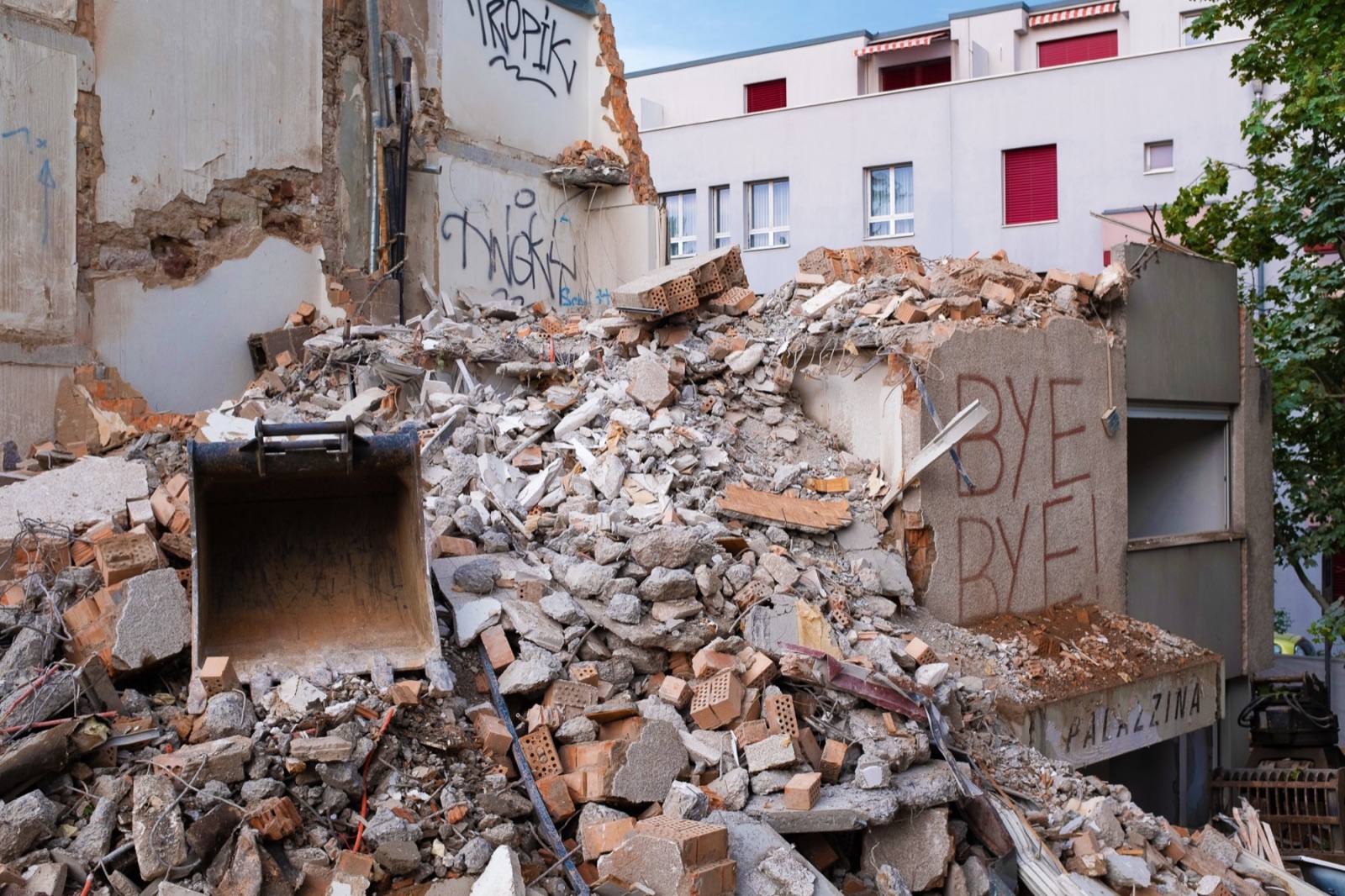
Demolition as a shared concern
Before asking what should replace a building, this agenda asks what can be kept, repaired or adapted. It connects the physical resources of existing buildings with the lives, uses and memories they support. The actions below show different ways of making these questions public.
Look before replacing
A demolition decision is also a decision about resources, memory and who gets to remain. A useful starting point is an inventory: what is still sound, what can change, and whose everyday life depends on the building?
Key terms
- Adaptive reuse
- Adapting an existing building for a new use while keeping substantial parts of its structure or fabric. It starts with what is already there rather than treating a site as empty.
- Community organising
- Building relationships, shared priorities and collective capacity so that people can act together. It concerns how a group forms and sustains agency, not a particular final product.
- Counter-mapping
- Making a map that brings overlooked places, experiences or conflicts into view. In the atlas, demolition maps can make individual losses visible as part of a wider pattern.
- Demolition
- The removal of existing buildings. The issue is not only what is lost, but who decides, what alternatives are considered and how the costs of replacement are accounted for.
- Embodied carbon
- Greenhouse gas emissions associated with materials and construction processes across a building's life cycle, rather than the energy used to operate it. Keeping existing structures can avoid some of the emissions associated with replacement.
- Exhibition
- A curated presentation of material in a physical or digital space. It can make research accessible and support public discussion without itself demonstrating a policy outcome.
- Map
- A spatial representation that locates and relates information. A demolition map can document individual cases and make a wider pattern legible; its scope and gaps remain important.
- Material cycles
- Keeping materials and components in use through maintenance, reuse and recovery. Reusing a component and recycling it into a new material are different processes, with different demands and possibilities.
- Policy advocacy
- Working to change rules, standards or public decisions through evidence, proposals and engagement with decision-makers. A submitted proposal is an output, not proof that a policy has changed.
- Public campaigning
- Bringing an issue into public discussion through coordinated communication and collective action. Exhibitions, events and publications can be formats used within this strategy.
- Repair
- Addressing damage or wear so that a building or component can continue to be used. Repair also opens a discussion about care, maintenance and the assumption that replacement is necessary.
- Research and comparison
- Gathering and comparing evidence to make assumptions, alternatives and trade-offs visible. The research may support a campaign, a shared resource or a proposal.
- Resource depletion
- The pressure created by extracting and consuming finite materials. In construction, it raises questions about how much new material is needed and how existing stocks can remain useful.
- Retention
- Keeping an existing building, or significant parts of it, rather than replacing it. Retention can be combined with repair and changes of use.
- Toolkit
- A collection of practical resources or methods intended for use by others. A useful toolkit makes its context, limitations and steps for adaptation clear.
Related Actions
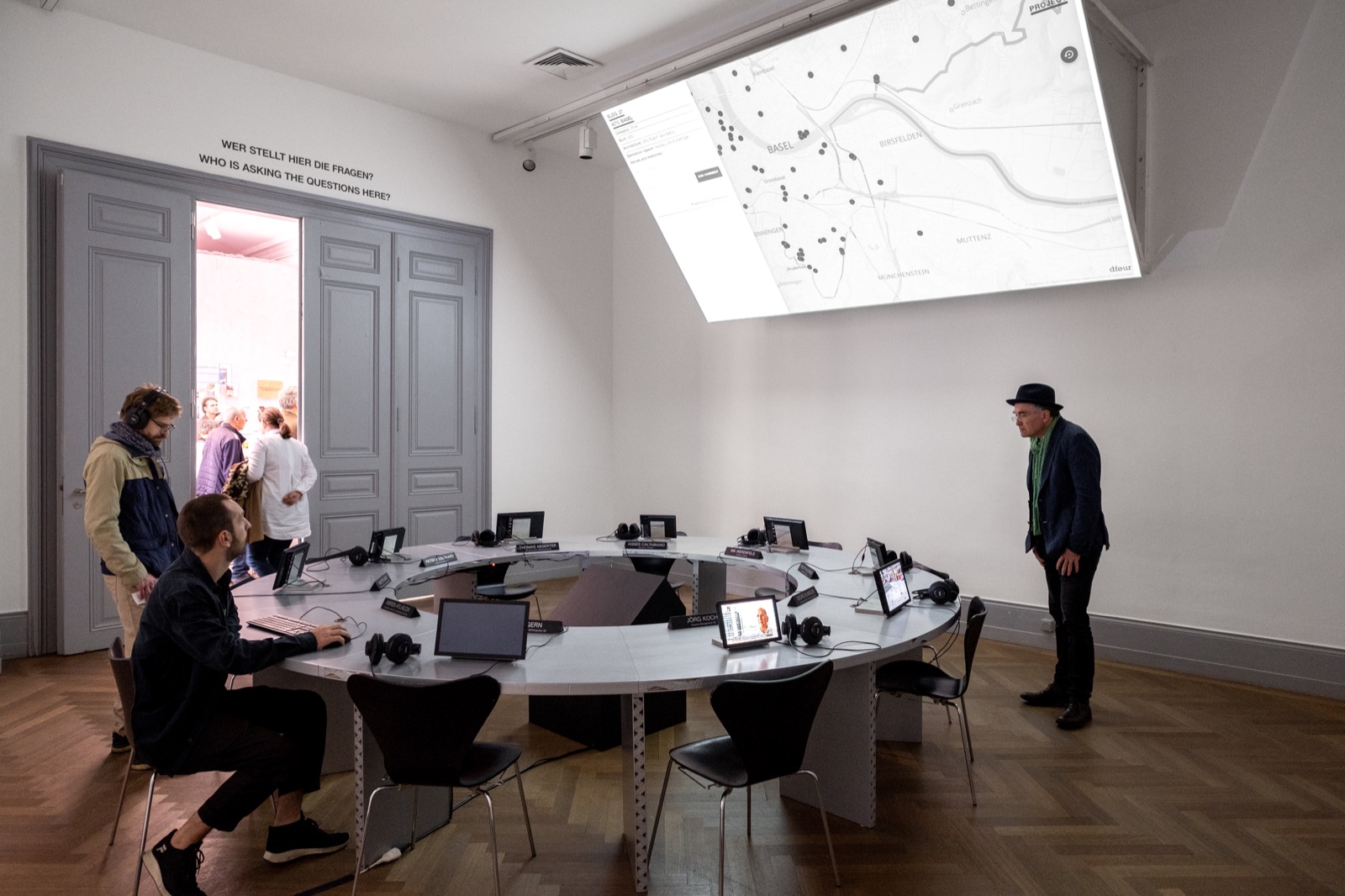
Map threatened buildings
- Making threatened buildings visible through a shared public map.

Housing Crisis
Housing for everyone.
↓ Open
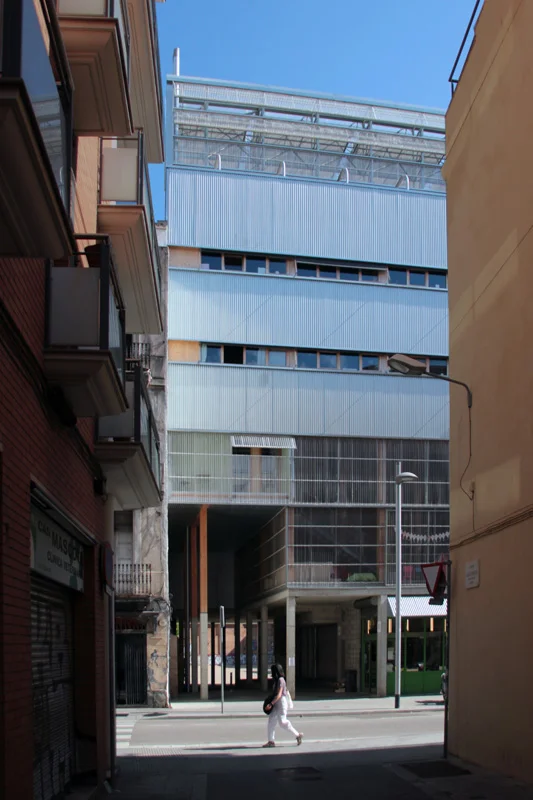
Housing Crisis as a shared concern
Housing is more than a unit of real estate: it provides continuity, security and access to a neighbourhood. This agenda asks how collective ownership, tenant organising and participatory planning can make those conditions less dependent on purchasing power. The examples below offer different approaches rather than a single model to copy.
Who can afford to stay?
An adequate home needs more than floor area. Security of tenure, affordability and access to shared services are inseparable. Comparing ownership models and listening to residents can reveal alternatives that a purely financial appraisal misses.
Key terms
- Access to space
- Who can use, occupy and influence buildings, land and shared spaces. Legal rights, ownership, cost and social barriers all affect access.
- Built project
- A realised spatial intervention or building. It makes an approach tangible, while its longer-term social and environmental outcomes still require separate assessment.
- Community organising
- Building relationships, shared priorities and collective capacity so that people can act together. It concerns how a group forms and sustains agency, not a particular final product.
- Cooperative housing
- Housing organised through a cooperative, with residents participating in collective decisions. Ownership, tenure and affordability arrangements differ between projects; a concrete example helps explain how each model works.
- Housing affordability
- Whether people can access and keep adequate housing without costs displacing other basic needs. Affordability depends on income, tenure, long-term costs and security, not only the initial price.
- Housing justice
- Asking who has access to secure, affordable and adequate housing, who is excluded, and who can influence decisions about where and how people live.
- Participatory design
- Involving the people affected by a project in shaping its aims and design decisions. The extent of their decision-making power should be described rather than assumed.
Related Actions
Organise collective housing
- Organising housing around collective needs and long-term stewardship.
- Activists
- → Lacol
- Applications
- → La Borda
Climate Adaptation
Adapt to a changing climate.
↓ Open
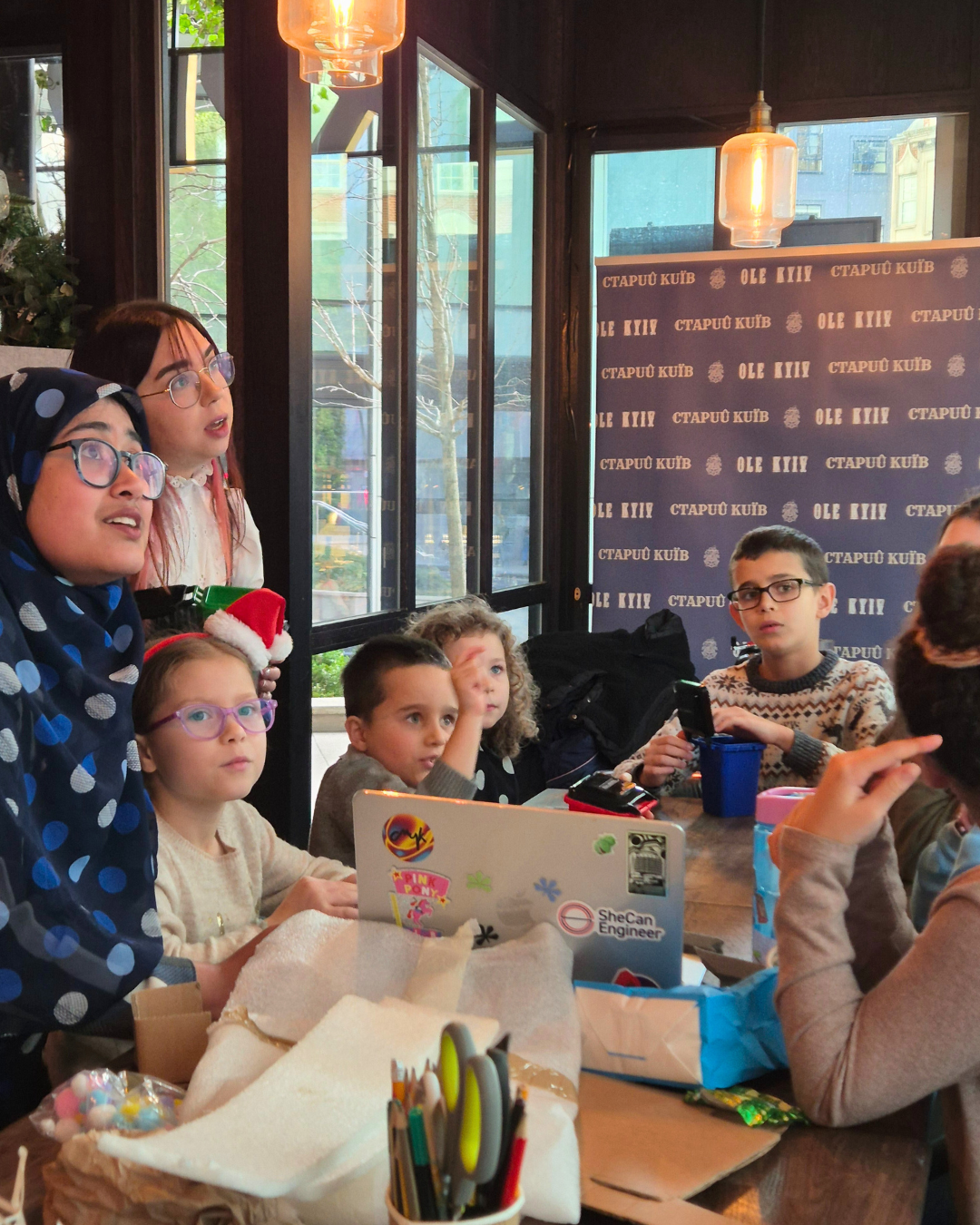
Climate Adaptation as a shared concern
Heat, heavy rain and other climate pressures affect people and places unequally. Architectural activism can start by identifying who lacks shade, shelter or access to shared space, then working with those communities on useful changes. Maintenance, public access and long-term responsibility matter as much as the initial intervention.
Care under changing conditions
Shade, ventilation, water and spaces of refuge are everyday infrastructure. Ask who is exposed, who can reach a safe place and who will maintain it. An intervention only becomes useful when those questions are answered together.
Key terms
- Climate adaptation
- Adjusting buildings, public spaces and everyday practices to changing climate conditions. The questions include not only what protects against heat or flooding, but who can access that protection.
Land Consumption
Use less land.
↓ Open
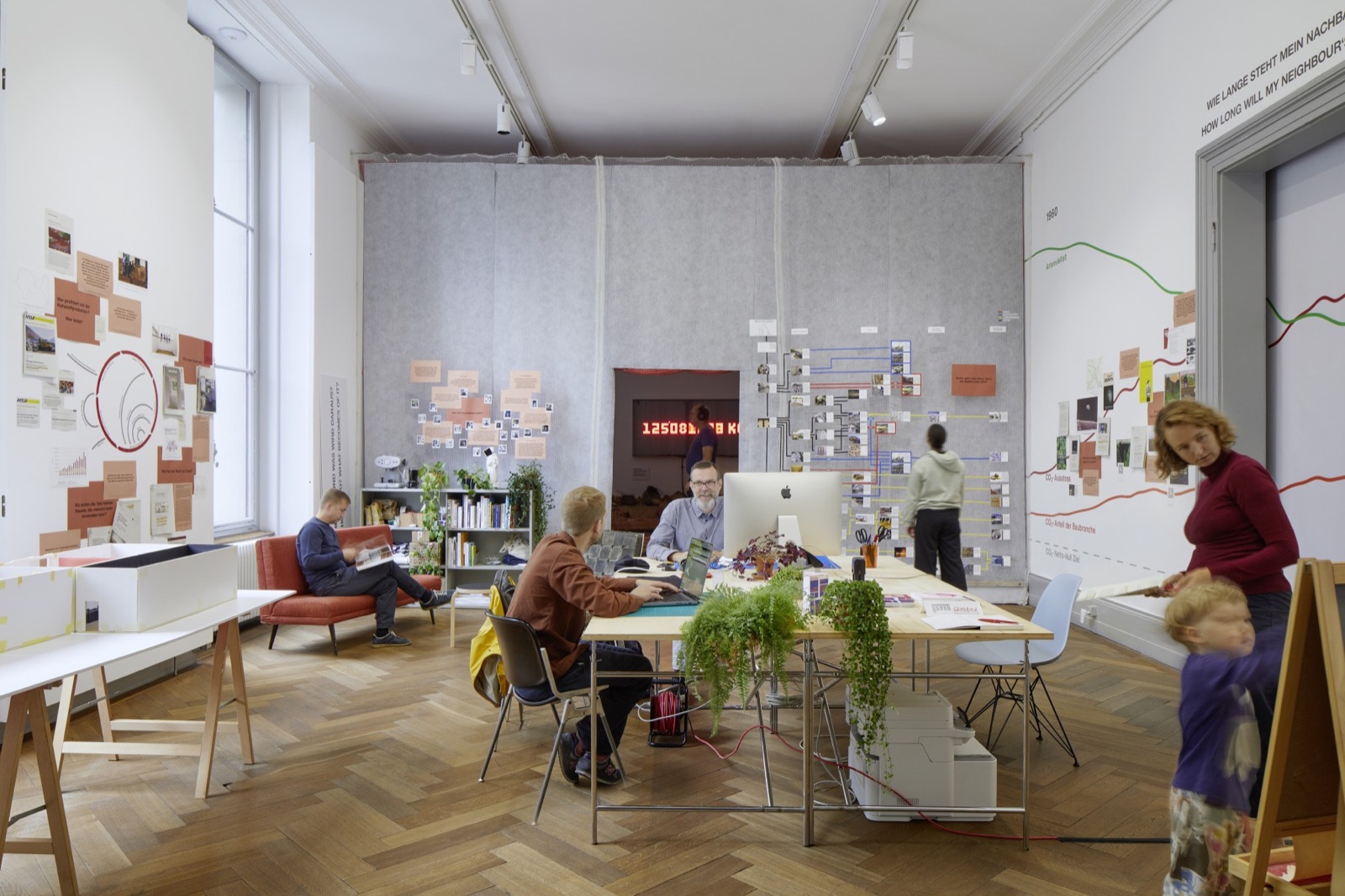
Land Consumption as a shared concern
Before building on new ground, this agenda asks what space already exists and who can use it. Reusing vacant buildings and sharing underused spaces can offer alternatives to expansion. Those decisions also involve ownership, infrastructure and the rights of people already living in a place.
Work with the space already there
Vacant floors and sealed ground belong in the same conversation. Before expanding a settlement, look at underused buildings, shared uses and opportunities to restore living soil. The question is how to meet needs without treating land as an unlimited resource.
Key terms
- Access to space
- Who can use, occupy and influence buildings, land and shared spaces. Legal rights, ownership, cost and social barriers all affect access.
- Adaptive reuse
- Adapting an existing building for a new use while keeping substantial parts of its structure or fabric. It starts with what is already there rather than treating a site as empty.
- Knowledge sharing
- Making methods, resources and experience available so that others can adapt and use them. Attention to accessibility and maintenance matters as much as publishing information.
- Land stewardship
- Taking responsibility for land over time, including its uses, ecological conditions and the people who depend on it. It shifts attention from a single development project to long-term care and access.
- Material library
- An organised collection of material samples or information that supports comparison and selection. A library may be physical, digital or both.
- Research and comparison
- Gathering and comparing evidence to make assumptions, alternatives and trade-offs visible. The research may support a campaign, a shared resource or a proposal.
- Resource depletion
- The pressure created by extracting and consuming finite materials. In construction, it raises questions about how much new material is needed and how existing stocks can remain useful.
- Toolkit
- A collection of practical resources or methods intended for use by others. A useful toolkit makes its context, limitations and steps for adaptation clear.
Related Actions
Map threatened buildings
- Making threatened buildings visible through a shared public map.
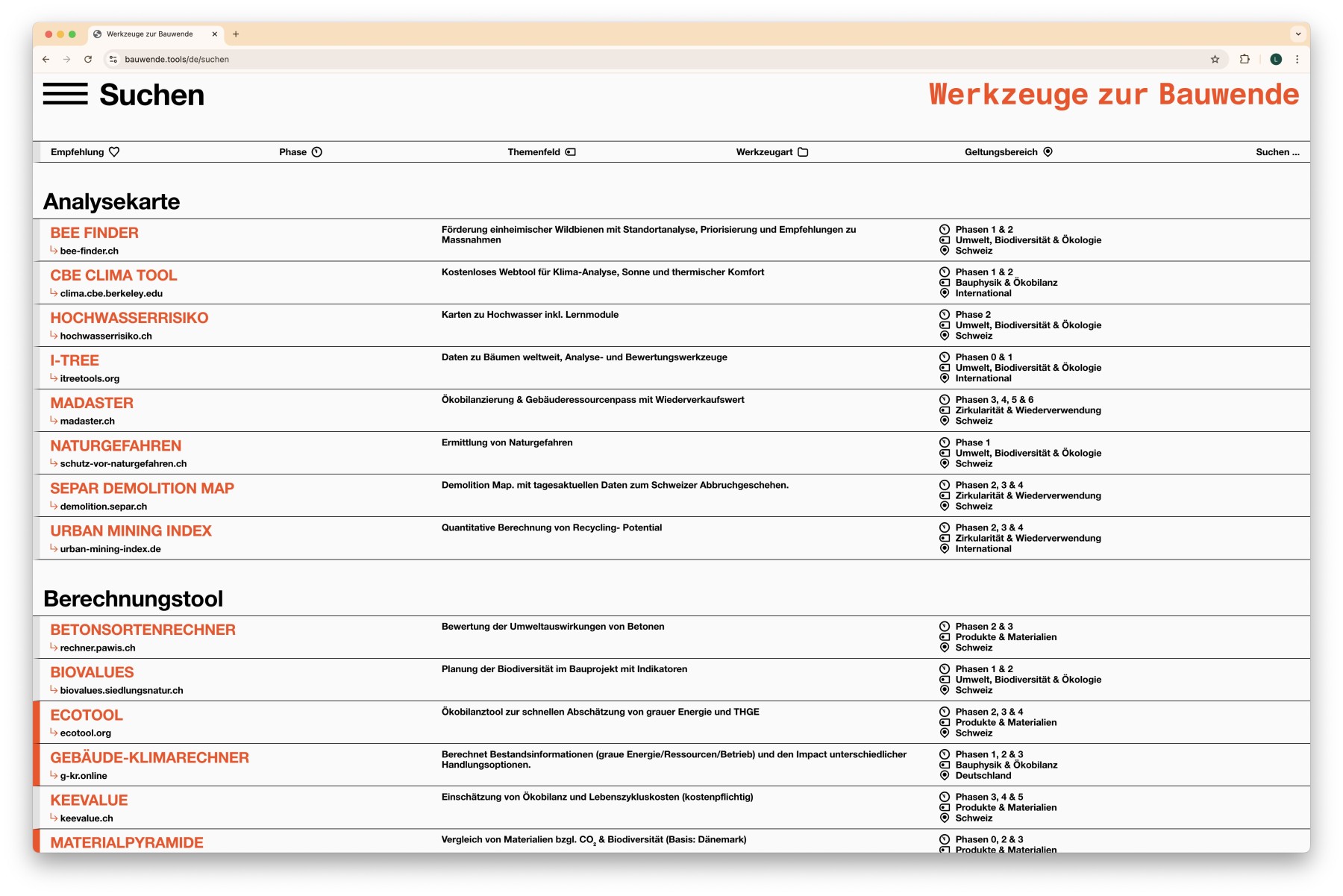
Share reuse knowledge
- Turning dispersed material and building knowledge into accessible tools.
- Activists
- → Countdown 2030→ ACAN Netherlands
- Applications
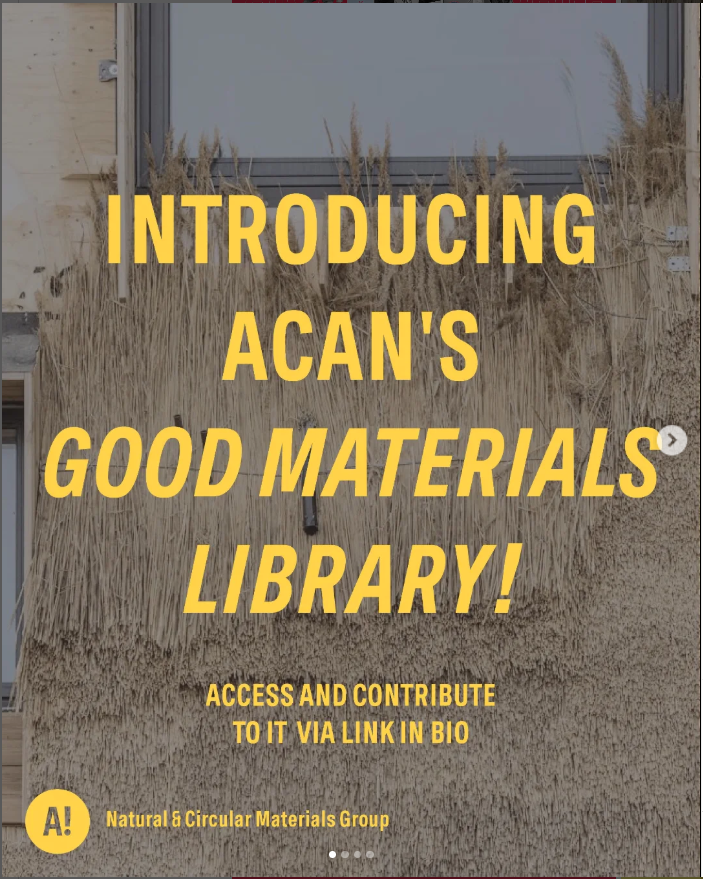
- → Bauwende.tools→ Good Materials Library
Organise collective housing
- Organising housing around collective needs and long-term stewardship.
- Activists
- → Lacol
- Applications
- → La Borda
Create a learning workshop
- Creating settings where people can learn, discuss and act together.
- Activists
- → Architects Climate Action Network
- Applications
- → Youth Sustainability Workshops
Decarbonisation
Build with fewer emissions.
↓ Open
Decarbonisation as a shared concern
Reducing construction emissions starts with questioning replacement, retaining useful structures and working with materials already in circulation. Activists make these choices visible through research, public tools and political demands. The relevant question is not only what a building is made of, but whether and how it needs to change.
Retain value, reduce demand
Operational energy is only one part of a building’s footprint. Construction also involves extraction, transport and material production. Retaining structures and reducing new material demand should be considered alongside energy improvements, with the assumptions made explicit.
Key terms
- Adaptive reuse
- Adapting an existing building for a new use while keeping substantial parts of its structure or fabric. It starts with what is already there rather than treating a site as empty.
- Carbon emissions
- Greenhouse gas emissions associated with construction, materials and building use. Actions can address these at the level of a building, a supply chain or public policy.
- Climate literacy
- The ability to understand climate impacts and connect them to practical choices. In architectural activism, this includes making knowledge about buildings and materials accessible beyond specialists.
- Education
- Creating opportunities to learn and develop practical understanding together. A workshop is one possible format; education describes the approach rather than the event itself.
- Embodied carbon
- Greenhouse gas emissions associated with materials and construction processes across a building's life cycle, rather than the energy used to operate it. Keeping existing structures can avoid some of the emissions associated with replacement.
- Exhibition
- A curated presentation of material in a physical or digital space. It can make research accessible and support public discussion without itself demonstrating a policy outcome.
- Knowledge sharing
- Making methods, resources and experience available so that others can adapt and use them. Attention to accessibility and maintenance matters as much as publishing information.
- Material cycles
- Keeping materials and components in use through maintenance, reuse and recovery. Reusing a component and recycling it into a new material are different processes, with different demands and possibilities.
- Material library
- An organised collection of material samples or information that supports comparison and selection. A library may be physical, digital or both.
- Policy advocacy
- Working to change rules, standards or public decisions through evidence, proposals and engagement with decision-makers. A submitted proposal is an output, not proof that a policy has changed.
- Policy proposal
- A document setting out a proposed change to policy or regulation. Its publication, submission, adoption and effects are distinct stages that should not be conflated.
- Public campaigning
- Bringing an issue into public discussion through coordinated communication and collective action. Exhibitions, events and publications can be formats used within this strategy.
- Repair
- Addressing damage or wear so that a building or component can continue to be used. Repair also opens a discussion about care, maintenance and the assumption that replacement is necessary.
- Research and comparison
- Gathering and comparing evidence to make assumptions, alternatives and trade-offs visible. The research may support a campaign, a shared resource or a proposal.
- Resource depletion
- The pressure created by extracting and consuming finite materials. In construction, it raises questions about how much new material is needed and how existing stocks can remain useful.
- Retention
- Keeping an existing building, or significant parts of it, rather than replacing it. Retention can be combined with repair and changes of use.
- Toolkit
- A collection of practical resources or methods intended for use by others. A useful toolkit makes its context, limitations and steps for adaptation clear.
- Workshop
- A facilitated session in which participants learn, discuss or make something together. The format can support education, organising or design depending on its purpose.
Related Actions
Map threatened buildings
- Making threatened buildings visible through a shared public map.
Share reuse knowledge
- Turning dispersed material and building knowledge into accessible tools.
- Activists
- → Countdown 2030→ ACAN Netherlands
- Applications
- → Bauwende.tools→ Good Materials Library
Organise collective housing
- Organising housing around collective needs and long-term stewardship.
- Activists
- → Lacol
- Applications
- → La Borda
Create a learning workshop
- Creating settings where people can learn, discuss and act together.
- Activists
- → Architects Climate Action Network
- Applications
- → Youth Sustainability Workshops
Inequality
Share space and power.
↓ Open
Inequality as a shared concern
Who gets to define a problem, propose an alternative and take part in a decision? Architectural activism can open those processes to people who are usually excluded. This agenda connects access to housing and space with access to knowledge, resources and collective influence.
Who has a voice?
Access to architectural knowledge and planning processes is uneven. Translation, paid participation and shared decision-making can change who is able to take part. The test is not simply whether people were consulted, but whether their involvement changed the decision.
Key terms
- Access to space
- Who can use, occupy and influence buildings, land and shared spaces. Legal rights, ownership, cost and social barriers all affect access.
- Built project
- A realised spatial intervention or building. It makes an approach tangible, while its longer-term social and environmental outcomes still require separate assessment.
- Climate adaptation
- Adjusting buildings, public spaces and everyday practices to changing climate conditions. The questions include not only what protects against heat or flooding, but who can access that protection.
- Climate literacy
- The ability to understand climate impacts and connect them to practical choices. In architectural activism, this includes making knowledge about buildings and materials accessible beyond specialists.
- Community organising
- Building relationships, shared priorities and collective capacity so that people can act together. It concerns how a group forms and sustains agency, not a particular final product.
- Cooperative housing
- Housing organised through a cooperative, with residents participating in collective decisions. Ownership, tenure and affordability arrangements differ between projects; a concrete example helps explain how each model works.
- Counter-mapping
- Making a map that brings overlooked places, experiences or conflicts into view. In the atlas, demolition maps can make individual losses visible as part of a wider pattern.
- Education
- Creating opportunities to learn and develop practical understanding together. A workshop is one possible format; education describes the approach rather than the event itself.
- Housing affordability
- Whether people can access and keep adequate housing without costs displacing other basic needs. Affordability depends on income, tenure, long-term costs and security, not only the initial price.
- Housing justice
- Asking who has access to secure, affordable and adequate housing, who is excluded, and who can influence decisions about where and how people live.
- Knowledge sharing
- Making methods, resources and experience available so that others can adapt and use them. Attention to accessibility and maintenance matters as much as publishing information.
- Land stewardship
- Taking responsibility for land over time, including its uses, ecological conditions and the people who depend on it. It shifts attention from a single development project to long-term care and access.
- Map
- A spatial representation that locates and relates information. A demolition map can document individual cases and make a wider pattern legible; its scope and gaps remain important.
- Participatory design
- Involving the people affected by a project in shaping its aims and design decisions. The extent of their decision-making power should be described rather than assumed.
- Workshop
- A facilitated session in which participants learn, discuss or make something together. The format can support education, organising or design depending on its purpose.
Related Actions
Organise collective housing
- Organising housing around collective needs and long-term stewardship.
- Activists
- → Lacol
- Applications
- → La Borda
Create a learning workshop
- Creating settings where people can learn, discuss and act together.
- Activists
- → Architects Climate Action Network
- Applications
- → Youth Sustainability Workshops